
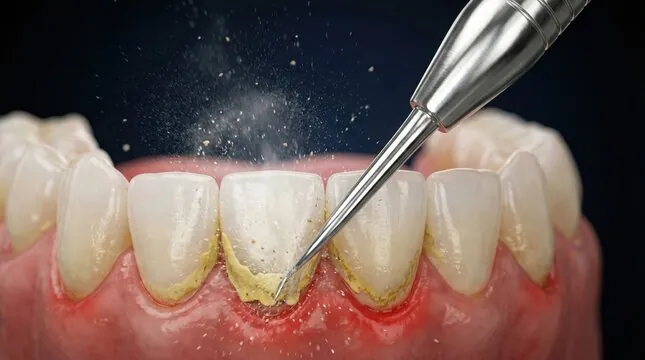
Scaling / Cleaning
Regular dental cleaning helps remove plaque, tartar and surface stains that cannot always be removed through brushing and flossing alone. At Floss & Gloss Aesthetics, professional scaling and cleaning helps maintain healthy teeth and gums while supporting your overall oral hygiene.
If you have tartar buildup, bleeding gums, bad breath or visible staining, a professional dental cleaning can help improve the cleanliness and health of your mouth.
What Is Dental Scaling & Cleaning?
Dental scaling and cleaning is a professional procedure used to remove accumulated plaque, tartar and certain surface stains from the teeth.
Plaque is a sticky layer of bacteria that naturally develops on teeth. If it is not removed effectively, it can harden into tartar, also known as dental calculus. Tartar cannot be completely removed with a regular toothbrush and usually requires professional dental instruments.
During a professional cleaning, your dentist or dental professional carefully cleans the teeth and areas around the gumline to help maintain good oral hygiene.
What Is Tartar?
Tartar is hardened plaque that forms when plaque is allowed to remain on the teeth. It can develop:
- Along the gumline
- Between teeth
- Behind the lower front teeth
- Around existing dental restorations
- In areas that are difficult to clean
Once tartar has formed, brushing alone cannot effectively remove it. Professional scaling helps remove these deposits and allows you to maintain a cleaner oral environment.
Why Do You Need Professional Dental Cleaning?
Even with regular brushing and flossing, plaque and tartar can accumulate in areas that are difficult to reach. Professional cleaning may be recommended to help:
- Remove tartar buildup
- Reduce plaque accumulation
- Remove certain surface stains
- Support healthy gums
- Improve oral cleanliness
- Reduce the risk of gum problems
- Freshen the mouth
- Maintain overall dental hygiene
The frequency of professional cleaning depends on your oral health and individual risk factors.
Signs You May Need Dental Scaling
You may benefit from a professional cleaning if you notice:
- Yellow or brown deposits around your teeth
- Visible tartar
- Bleeding while brushing or flossing
- Red or swollen gums
- Persistent bad breath
- Plaque buildup
- Surface staining
- A rough feeling on your teeth
- Food getting trapped around the gumline
Some gum problems may have few noticeable symptoms in their early stages, which is why regular dental examinations are important.
What Happens During Scaling & Cleaning?
- 1
Dental examination
Your dentist examines your teeth and gums to assess your oral health and identify areas of plaque, tartar or other concerns.
- 2
Scaling
Specialised dental instruments are used to carefully remove tartar and plaque deposits from the teeth and around the gumline.
- 3
Cleaning
The teeth are thoroughly cleaned to remove remaining deposits and certain surface stains.
- 4
Polishing
The teeth may be polished to help remove superficial staining and leave the tooth surfaces feeling smoother.
- 5
Oral hygiene guidance
Your dentist may provide personalised advice about brushing, flossing and other oral hygiene practices based on your needs.
Benefits of Professional Dental Cleaning
Regular professional cleaning can help:
- Remove hardened tartar
- Reduce plaque buildup
- Support healthy gums
- Reduce surface staining
- Improve the cleanliness of your teeth
- Freshen your breath
- Make teeth feel smoother
- Support long-term oral hygiene
- Identify potential dental problems earlier
Professional cleaning does not replace daily brushing and flossing. It works alongside your regular home-care routine.
Scaling & Gum Health
Tartar accumulation around the gumline can contribute to gum irritation and inflammation. Regular professional cleaning can help remove deposits that are difficult to clean at home.
If your gums are persistently swollen, painful or bleeding, a dental examination is important because these symptoms can be associated with gum disease or other dental conditions.
In cases of more advanced gum disease, a deeper periodontal cleaning or other treatment may be recommended instead of routine cleaning alone.
Scaling for Bad Breath
Bad breath can have several causes, including plaque and tartar accumulation, gum problems, tongue bacteria, dry mouth and certain medical or dietary factors.
Professional dental cleaning can help when plaque or tartar is contributing to bad breath. However, persistent bad breath should be assessed by a dentist to identify the underlying cause rather than relying on cleaning alone.
Scaling & Surface Stains
Professional cleaning can remove certain external or surface stains caused by factors such as:
- Tea
- Coffee
- Tobacco
- Certain foods
- Plaque accumulation
Scaling and polishing are different from teeth whitening. If you are looking to change the natural colour of your teeth rather than simply remove surface staining, professional teeth whitening may be a more appropriate cosmetic treatment.
How Often Should You Get Your Teeth Cleaned?
There is no single cleaning schedule that is suitable for everyone. Some people may benefit from routine professional cleaning at regular intervals, while others may need more frequent appointments because of:
- Heavy tartar buildup
- Gum disease
- Smoking or tobacco use
- Orthodontic braces
- Difficulty maintaining oral hygiene
- Certain medical or dental conditions
- A history of recurrent gum problems
Your dentist can recommend an appropriate cleaning schedule after assessing your teeth and gums.
Scaling & Cleaning for Patients With Braces
Braces can create additional areas where plaque and food particles can accumulate. Professional cleaning can be particularly useful during orthodontic treatment, alongside careful brushing and interdental cleaning at home.
If you wear braces, your dentist or orthodontic provider can advise you on the most appropriate cleaning routine.
After Dental Scaling & Cleaning
Your teeth and gums may feel slightly different immediately after cleaning. Some people may experience temporary sensitivity, particularly if there was significant tartar buildup or gum inflammation. After your cleaning, we recommend:
- Continue brushing twice a day
- Clean between your teeth regularly
- Follow your dentist's oral hygiene instructions
- Avoid smoking or tobacco use
- Limit foods and drinks that contribute to staining
- Drink water regularly
- Attend recommended dental check-ups
If you experience persistent pain, significant bleeding or unusual sensitivity after cleaning, contact your dental professional.
Does Scaling Damage Your Teeth?
Professional scaling performed correctly by a trained dental professional is intended to remove plaque and tartar without damaging healthy tooth structure.
After tartar is removed, your teeth may temporarily feel different or more sensitive. This can be particularly noticeable when substantial deposits had previously covered parts of the tooth surface.
Any persistent sensitivity or discomfort should be discussed with your dentist.
Scaling / Cleaning at Floss & Gloss Aesthetics
At Floss & Gloss Aesthetics, we take a preventive approach to dental care. Our professional cleaning appointments are designed to remove plaque and tartar while helping you understand how to maintain your teeth and gums between visits.
During your appointment, we can also identify areas that may require additional dental attention and recommend appropriate treatment when necessary.
Frequently Asked Questions
What is dental scaling?+
Dental scaling is a professional procedure used to remove hardened plaque, also known as tartar or calculus, from the teeth and around the gumline.
Is dental scaling painful?+
Scaling is generally well tolerated. You may experience some sensitivity or discomfort depending on the amount of tartar present and the condition of your gums. If you have sensitive teeth or significant gum inflammation, let your dentist know before treatment.
Does scaling remove yellow teeth?+
Scaling can remove certain external stains and tartar that make teeth appear yellow or darker. It does not change the natural colour of the tooth. Teeth whitening may be considered if you want to lighten the natural shade of your teeth.
Does scaling whiten teeth?+
Scaling and polishing can make teeth look cleaner and brighter by removing surface stains. However, professional scaling is not the same as teeth whitening and does not bleach the natural tooth colour.
How often should I get dental cleaning?+
The recommended frequency depends on your oral health, tartar buildup, gum condition and individual risk factors. Your dentist can recommend an appropriate schedule after examining your teeth and gums.
Can scaling stop bleeding gums?+
Professional cleaning can help remove plaque and tartar that contribute to gum inflammation. However, persistent bleeding may indicate gum disease or another problem and should be assessed by a dentist.
Is scaling good for gums?+
Yes. Removing plaque and tartar around the gumline can support healthy gums. However, advanced gum disease may require additional periodontal treatment.
Can dental cleaning remove bad breath?+
Cleaning can help when plaque, tartar or gum problems contribute to bad breath. Persistent bad breath may have other causes and should be evaluated by a dental professional.
Can I eat after dental scaling?+
You can generally eat after a routine cleaning. If you experience sensitivity, your dentist may recommend avoiding very hot, cold or strongly flavoured foods for a short period.
Can I brush my teeth after scaling?+
Yes. Continue your normal oral hygiene routine unless your dentist gives you different instructions. Use a soft toothbrush and brush gently if your gums feel sensitive.
Is scaling safe during orthodontic treatment?+
Professional cleaning can be beneficial during orthodontic treatment because braces can make plaque removal more difficult. Your dentist or orthodontic provider can advise you on the appropriate cleaning schedule.
Does everyone need dental scaling?+
Not everyone needs scaling at the same frequency. The need for professional cleaning depends on the amount of tartar and plaque present and the condition of your teeth and gums.
What is the difference between scaling and cleaning?+
Scaling specifically refers to removing hardened plaque and tartar from the teeth. Professional cleaning can include scaling, polishing and removal of surface deposits or stains.
Can scaling remove tartar permanently?+
Scaling removes existing tartar, but new plaque and tartar can form again. Regular brushing, flossing and professional dental care are important for preventing buildup.
Dental Implants at Floss & Gloss
Thinking about dental implants? Learn more about your options with a no-obligation consultation. Our team is here to help you find the right treatment for your smile.