
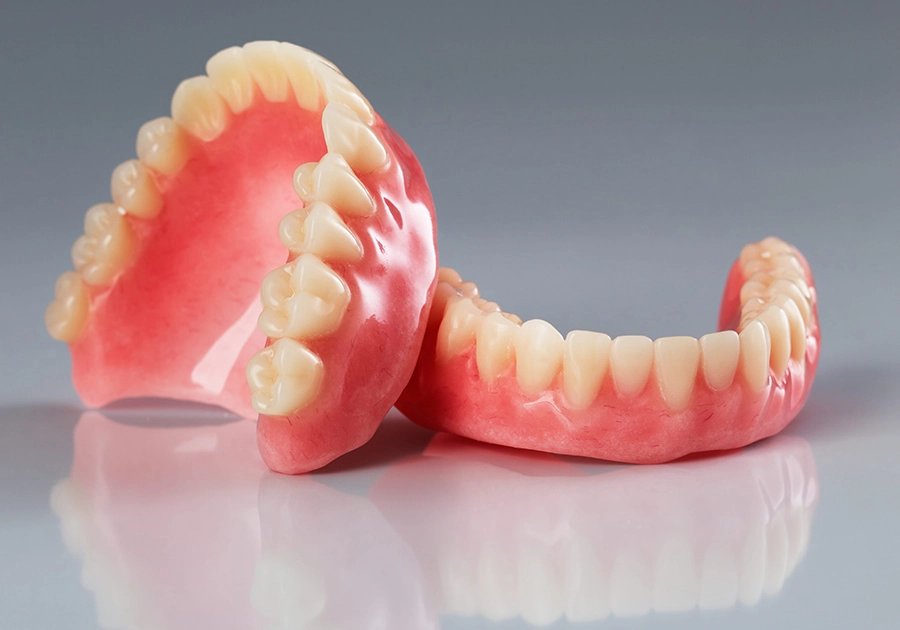
Partial / Full Dentures
Missing teeth can affect more than your smile. They can make chewing difficult, affect speech and change the way your remaining teeth and facial structures support your smile.
At Floss & Gloss Aesthetics, we provide personalised denture treatment to help restore the appearance and function of your smile. Depending on the number of missing teeth and your individual dental needs, partial or full dentures may be recommended.
What Are Dentures?
Dentures are removable dental appliances designed to replace missing teeth and surrounding tissues. They can be used to restore missing teeth in either the upper or lower jaw, or both. There are two main types of dentures:
- Partial dentures – replace some missing teeth while remaining natural teeth are still present.
- Full dentures – replace all of the natural teeth in an upper or lower arch.
Your dentist will assess your oral health, remaining teeth, gums and individual needs before recommending the most appropriate option.
Partial Dentures
Partial dentures are designed for people who have some natural teeth remaining but have lost one or more teeth. A partial denture can fill the spaces created by missing teeth while also helping support the surrounding teeth and improve chewing function.
Depending on the design, partial dentures may use clasps or other components to help secure the appliance.
Partial dentures may help with:
- Replacing several missing teeth
- Improving chewing ability
- Filling visible gaps in your smile
- Supporting speech
- Restoring the appearance of your teeth
- Preventing remaining teeth from appearing isolated within large spaces
The suitability and design of a partial denture depend on the condition and position of your remaining teeth.
Full Dentures
Full dentures are designed to replace all natural teeth in an upper or lower dental arch. They may be recommended when most or all teeth in an arch are missing or cannot be predictably restored.
Full dentures are custom-made to fit the shape of your mouth and are designed to restore basic chewing function and the appearance of your smile. They can also help provide support to the lips and cheeks where tooth loss has affected facial appearance.
Who May Need Dentures?
Dentures may be suitable for people who have lost multiple teeth or all of their teeth in an arch. You may benefit from a denture assessment if you have:
- Multiple missing teeth
- Difficulty chewing because of missing teeth
- Significant gaps in your smile
- Loose or severely damaged teeth that cannot be restored
- Lost all teeth in the upper or lower arch
- Difficulty speaking due to extensive tooth loss
- Concerns about the appearance of missing teeth
Your dentist will assess your individual situation before recommending dentures or alternative tooth-replacement options.
Denture Treatment Options
Partial dentures
Partial dentures replace selected missing teeth while working alongside your remaining natural teeth. They can be a suitable option when several teeth are missing but healthy natural teeth remain.
Full dentures
Full dentures replace all teeth in an upper or lower arch. They are custom-designed based on the shape of your mouth and the position required to provide an appropriate fit.
Upper dentures
Upper dentures replace missing teeth in the upper jaw and are designed to provide support for the upper lip and restore the appearance of the upper teeth.
Lower dentures
Lower dentures replace missing teeth in the lower jaw. Because the lower jaw has the tongue and other structures that affect denture movement, achieving a comfortable and stable fit is particularly important.
The Denture Treatment Process
- 1
Initial consultation
We begin by discussing your dental concerns, existing teeth and what you would like to achieve. Your dentist will examine your mouth and discuss suitable tooth-replacement options.
- 2
Dental assessment
Your remaining teeth, gums, jaw and oral tissues are assessed. If necessary, dental X-rays or other diagnostic records may be recommended.
- 3
Treatment planning
Based on your assessment, we determine whether partial or full dentures may be appropriate. Alternative options may also be discussed depending on your dental condition.
- 4
Dental impressions or scans
Measurements, impressions or digital scans may be taken to create a denture designed to fit the shape of your mouth.
- 5
Denture design & fabrication
Your denture is custom-made based on the required size, shape, tooth arrangement and fit. The appearance of the replacement teeth can also be considered when planning the final result.
- 6
Fitting
Once the denture is ready, it is fitted and assessed for comfort, appearance and function. Adjustments may be required to improve the fit.
- 7
Follow-up
Follow-up appointments allow your dentist to check how you are adapting to the denture and address any areas of discomfort or movement.
Benefits of Dentures
Dentures can help:
- Replace missing teeth
- Improve chewing function
- Restore the appearance of your smile
- Support speech
- Fill visible gaps caused by tooth loss
- Provide support to the lips and cheeks
- Improve confidence when smiling
- Offer a removable option for replacing missing teeth
The results and level of comfort depend on factors such as the type of denture, oral anatomy, fit and individual adaptation.
Getting Used to New Dentures
It can take some time to become comfortable with a new denture. During the adjustment period, you may notice:
- Increased saliva production
- Mild gum tenderness
- A feeling of fullness in the mouth
- Changes in speech
- Difficulty chewing certain foods
- A need to practise inserting and removing the denture
These sensations can improve as you become accustomed to the appliance. If your denture causes persistent pain, rubbing or significant discomfort, contact your dentist so that the fit can be assessed and adjusted if required.
Caring for Your Dentures
Proper denture care helps maintain the condition and hygiene of your appliance. We recommend:
- Remove your dentures as instructed by your dentist
- Clean your dentures regularly
- Rinse your dentures after eating when appropriate
- Handle dentures carefully to avoid dropping or damaging them
- Keep your mouth and gums clean even when wearing full dentures
- Follow your dentist's instructions regarding overnight denture use
- Store dentures appropriately when they are not being worn
- Attend regular dental check-ups
Avoid using very hot water to clean or soak your dentures, as excessive heat may affect their shape.
Caring for Your Gums & Remaining Teeth
If you have partial dentures, maintaining your natural teeth is particularly important. Continue to:
- Brush your natural teeth twice a day
- Clean between your teeth
- Clean around areas where the denture contacts your natural teeth
- Maintain regular dental check-ups
- Follow your dentist's recommended oral hygiene routine
Even with full dentures, your gums, tongue and remaining oral tissues should be cleaned regularly.
How Long Do Dentures Last?
The lifespan of a denture varies from person to person. Changes in your gums, jawbone and oral tissues can affect the fit of your denture over time. Normal wear can also affect the appliance.
Regular dental reviews allow your dentist to check the condition and fit of your dentures and determine whether adjustments, relining or replacement may be required.
Dentures vs Other Tooth Replacement Options
Dentures are one of several ways to replace missing teeth. Depending on your oral health and individual circumstances, your dentist may also discuss options such as:
- Dental bridges
- Dental implants
- Implant-supported dentures
Each option has different advantages, requirements and considerations. Your dentist can help you understand which approach is appropriate for your particular situation.
Dentures at Floss & Gloss Aesthetics
At Floss & Gloss Aesthetics, we take a personalised approach to replacing missing teeth. We assess your oral health, understand your concerns and discuss the available options before recommending a treatment plan.
Whether you need to replace several missing teeth or all the teeth in an arch, we aim to provide a comfortable and functional solution that complements your smile.
Frequently Asked Questions
What is the difference between partial and full dentures?+
Partial dentures replace some missing teeth while natural teeth remain in the mouth. Full dentures replace all natural teeth in an upper or lower dental arch.
Are dentures comfortable?+
Modern dentures are designed to fit the shape of your mouth, but it can take some time to adjust to a new appliance. If your dentures cause persistent pain or rubbing, your dentist can assess the fit and make adjustments where appropriate.
Can I eat normally with dentures?+
Dentures can help restore chewing function, but it may take some practice to become comfortable eating with them. It is usually helpful to start with softer foods and gradually introduce more challenging foods as you adapt.
Can I sleep with my dentures?+
Your dentist will advise you on whether your dentures should be removed overnight. Removing dentures for a period of time can allow the underlying oral tissues to rest, but individual instructions may vary.
How long does it take to get dentures?+
The treatment timeline depends on the type of denture, the condition of your mouth and whether other dental procedures are required first. Your dentist can explain the expected process during your consultation.
Will dentures look natural?+
Dentures can be designed with tooth shapes, sizes and colours selected to complement your appearance. The final result depends on the denture design, available space and individual factors.
Can dentures improve my speech?+
Replacing missing teeth can help support speech, although you may initially notice changes in pronunciation while adjusting to a new denture. With practice, many people become more comfortable speaking with their dentures.
Can I get dentures if I still have some natural teeth?+
Yes. If you have some healthy natural teeth remaining, a partial denture may be an option for replacing missing teeth. Your dentist will assess your remaining teeth before recommending treatment.
Do dentures need to be replaced?+
Dentures can wear over time, and changes in your gums and jaw can affect their fit. Your dentist can determine whether your denture needs adjustment, relining or replacement.
How do I clean my dentures?+
Dentures should be cleaned regularly using an appropriate denture-cleaning method recommended by your dentist. Your natural teeth, gums, tongue and other oral tissues should also be kept clean.
Can I use regular toothpaste on my dentures?+
Some regular toothpastes can be abrasive and may scratch denture surfaces. It is best to follow your dentist's recommendation regarding the appropriate cleaning product.
Are dentures the only option for missing teeth?+
No. Depending on your dental health and individual circumstances, bridges, dental implants or implant-supported dentures may also be possible options.
Can dentures be fitted immediately after tooth extraction?+
In some cases, immediate dentures can be planned before teeth are removed. However, not every patient or situation is suitable for this approach. Your dentist can discuss the available options based on your treatment needs.
Dental Implants at Floss & Gloss
Thinking about dental implants? Learn more about your options with a no-obligation consultation. Our team is here to help you find the right treatment for your smile.