
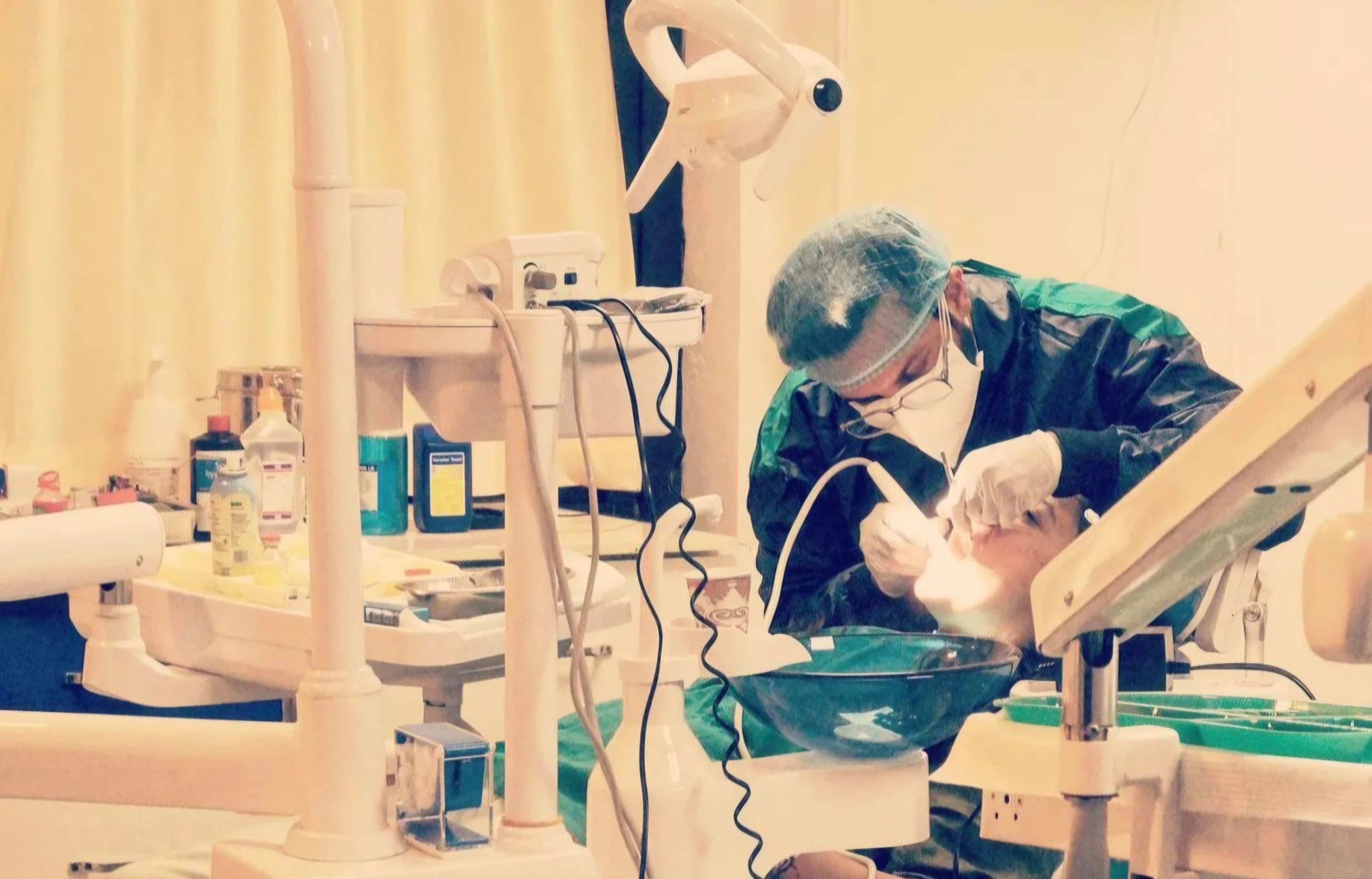
Dental Implants in Dharamshala
Missing teeth can affect the way you eat, speak, and feel about your smile. Dental implants in Dharamshala are a long-term tooth replacement option designed to replace the root of a missing tooth and support a dental restoration such as a crown, bridge, or denture.
At Floss & Gloss Aesthetics, we assess your oral health, jawbone condition, and individual requirements before recommending implant treatment. Our goal is to provide a carefully planned tooth replacement solution that restores function and supports a natural-looking smile.
What Are Dental Implants?
A dental implant is a small post, commonly made from titanium or another biocompatible material, that is surgically placed into the jawbone to replace the root of a missing tooth.
Once the implant has integrated with the surrounding bone, it can support a dental restoration such as:
- A single dental crown
- An implant-supported bridge
- An implant-supported denture
Unlike a conventional removable denture, an implant is designed to provide support from within the jawbone.
When Might You Need Dental Implants?
Dental implants may be considered when you have:
- One missing tooth
- Several missing teeth
- Multiple teeth that need replacement
- A completely missing set of teeth
- Difficulty using or retaining conventional dentures
- A tooth that cannot be predictably restored and needs to be removed
Implants are not automatically suitable for everyone. Your dentist will assess your individual circumstances and discuss appropriate alternatives where necessary.
Benefits of Dental Implants
Depending on your individual situation, dental implants can offer several potential benefits:
- Replace missing teeth with a fixed restoration
- Restore chewing function
- Support a natural-looking smile
- Avoid relying on neighbouring teeth for certain single-tooth replacements
- Provide support for implant-supported bridges or dentures
- Help maintain stimulation of the jawbone in the area of the missing tooth
- Provide a long-term tooth replacement option when appropriately planned and maintained
The benefits and expected outcome depend on your oral health, bone condition, implant position, restoration, and long-term care.
What Is the Dental Implant Process?
Dental implant treatment generally involves several stages.
- 1
Initial consultation
Your dentist will examine your teeth, gums, bite, and overall oral health. Your medical and dental history will also be considered.
- 2
Implant assessment & planning
Dental imaging may be required to evaluate the jawbone and determine the appropriate position for the implant.
- 3
Tooth removal if required
If the tooth is still present but cannot be restored, it may need to be removed before or as part of the implant treatment plan.
- 4
Bone assessment
An adequate amount of healthy bone is important for implant placement. If there is insufficient bone, additional procedures such as bone grafting may sometimes be considered.
- 5
Implant placement
The implant is surgically placed into the jawbone at the planned position.
- 6
Healing & integration
The implant needs time to integrate with the surrounding bone. This process is known as osseointegration.
- 7
Abutment & crown
Once the implant has sufficiently healed, an abutment and custom dental crown or another restoration can be attached.
- 8
Final review
Your dentist checks the restoration, bite, comfort, appearance, and overall function.
Are Dental Implants Painful?
Dental implant placement is normally performed using local anaesthesia to keep you comfortable during the procedure.
Some swelling, tenderness, or discomfort can occur following surgery. Your dentist will provide appropriate aftercare instructions and explain what to expect during recovery. If you experience unusual or persistent pain, swelling, or other concerns after treatment, contact your dental team for assessment.
How Long Does Dental Implant Treatment Take?
The overall treatment timeline varies considerably between patients. Factors that can affect treatment time include:
- Number of implants required
- Location of the missing tooth
- Jawbone condition
- Need for tooth extraction
- Need for bone grafting
- Healing and osseointegration
- Type of final restoration
Some patients may require additional preparatory treatment before the implant can be placed. Your dentist can provide a more specific timeline after assessing your case.
Do I Need a Bone Graft Before Dental Implants?
Not everyone needs a bone graft. An adequate amount of suitable jawbone is generally required to provide support for an implant. If there has been significant bone loss following tooth loss, gum disease, trauma, or other causes, bone augmentation may sometimes be recommended.
Your dentist may use dental imaging to assess the available bone before deciding whether additional treatment is required.
Who Can Get Dental Implants?
Many adults with missing teeth may be candidates for dental implants, but suitability depends on individual oral and general health factors. Your dentist may consider:
- Jawbone quantity and quality
- Gum health
- Oral hygiene
- Smoking or tobacco use
- Existing dental conditions
- Overall health
- Ability to maintain the implant and surrounding tissues
Active gum disease or other oral health problems may need to be treated before implant placement.
Dental Implants vs Dental Bridges
Dental implants and dental bridges can both be used to replace missing teeth, but they work differently. A dental implant replaces the root of a missing tooth and can support a crown without necessarily requiring neighbouring teeth to be used as supports.
A dental bridge replaces the missing tooth using neighbouring teeth or implants for support. The appropriate option depends on the number and position of missing teeth, the condition of surrounding teeth, your bone health, and your preferences.
Dental Implants vs Dentures
Dentures are removable restorations that replace multiple missing teeth or an entire arch. Dental implants are placed into the jawbone and can support fixed crowns, bridges, or implant-supported dentures.
For some patients, implants can also be used to improve the support and stability of dentures. Your dentist can explain which tooth replacement options are appropriate for your situation.
How Long Do Dental Implants Last?
Dental implants are designed as a long-term tooth replacement option, but their longevity depends on several factors. These include:
- Oral hygiene
- Gum health
- Bone health
- Smoking
- Bite forces
- Teeth grinding or clenching
- Quality and maintenance of the restoration
- Regular dental examinations
The implant and the crown or other restoration are separate components and may have different maintenance or replacement requirements over time.
How to Care for Dental Implants
Good oral hygiene is essential for maintaining the health of your implants and the surrounding tissues. You should:
- Brush your teeth twice a day
- Clean carefully around the implant
- Clean between teeth using an appropriate interdental method
- Attend regular dental check-ups
- Follow your dentist's implant maintenance recommendations
- Avoid smoking or tobacco where possible
- Address teeth grinding or clenching if it is affecting your restoration
Although an implant itself cannot develop tooth decay, the gums and bone surrounding it can still be affected by inflammation and infection.
What Happens If a Missing Tooth Is Not Replaced?
The effects of an untreated missing tooth vary from person to person. Depending on the location and number of missing teeth, tooth loss can contribute to:
- Difficulty chewing
- Changes in speech
- Movement of neighbouring teeth
- Changes in the bite
- Loss of bone in the area of the missing tooth
- Changes in the appearance of the smile
Not every missing tooth necessarily requires an implant, but replacing a missing tooth can be beneficial in appropriate cases.
Why Choose Floss & Gloss Aesthetics for Dental Implants?
At Floss & Gloss Aesthetics, implant treatment begins with careful assessment and treatment planning rather than a one-size-fits-all approach. Our approach includes:
- Detailed dental and oral assessment
- Individualised treatment planning
- Evaluation of gum and bone health
- Discussion of available tooth replacement options
- Clear explanation of each stage of treatment
- Focus on restoring both function and appearance
- Guidance on long-term implant care
If you are looking for dental implants in Dharamshala, a consultation can help determine whether implant treatment is suitable for your missing tooth or teeth.
Frequently Asked Questions
How much do dental implants cost in Dharamshala?+
The cost varies depending on the number of implants, type of restoration, condition of the jawbone, and whether additional procedures such as extraction or bone grafting are required. A consultation is needed to determine the appropriate treatment plan and cost.
Are dental implants painful?+
Implant placement is performed under local anaesthesia. Some swelling, tenderness, or discomfort may occur during the recovery period, but your dentist will provide aftercare instructions to help manage this.
How long does a dental implant take?+
The overall process can take several months in some cases because the implant may need time to integrate with the jawbone before the final restoration is placed. The exact timeline varies between patients.
Are dental implants permanent?+
Dental implants are intended to be a long-term tooth replacement solution, but they are not guaranteed to last for life. Their longevity depends on factors including oral hygiene, gum health, bone health, bite forces, lifestyle, and regular maintenance.
Can I get an implant immediately after tooth extraction?+
In some cases, an implant may be placed immediately after extraction. In other cases, the area may need to heal first. The decision depends on factors such as infection, bone condition, and the individual treatment plan.
Do I need a bone graft for dental implants?+
Not necessarily. A bone graft may be recommended when there is insufficient bone to provide suitable support for an implant. Dental imaging and clinical assessment help determine whether grafting is required.
Can dental implants replace multiple teeth?+
Yes. Depending on the situation, multiple missing teeth can be replaced using individual implants, implant-supported bridges, or other implant-supported restorations.
Can dental implants replace all my teeth?+
Implant-supported treatment can be used for patients who have lost all or most of their teeth. The appropriate approach depends on bone condition, oral health, the number of implants required, and the type of restoration.
Can I get dental implants if I have gum disease?+
Active gum disease generally needs to be treated and controlled before implant placement. Healthy gums and supporting tissues are important for successful long-term implant maintenance.
Are dental implants better than dentures?+
Implants and dentures are different treatment options with different advantages and limitations. The appropriate choice depends on your oral health, bone condition, number of missing teeth, lifestyle, and treatment goals.
How do I clean dental implants?+
Implants should be cleaned regularly, just like natural teeth. Brushing and cleaning between teeth are important, and your dentist may recommend specific interdental brushes or other cleaning methods.
Can I eat normally with dental implants?+
Once treatment is complete and the restoration has been properly fitted, dental implants can allow you to eat a wide range of foods. Your dentist will provide specific instructions during the healing and restoration stages.
Can smokers get dental implants?+
Smoking can negatively affect healing and the health of tissues around dental implants. Your dentist will discuss the risks associated with smoking and may recommend reducing or stopping smoking as part of your treatment plan.
What happens if a dental implant fails?+
Implant failure is uncommon but can occur. If an implant becomes painful, loose, or otherwise problematic, your dentist will assess the cause and discuss appropriate treatment options.
Dental Implants at Floss & Gloss
Thinking about dental implants? Learn more about your options with a no-obligation consultation. Our team is here to help you find the right treatment for your smile.